Making Waste Talk: How RFID Enables Full-Lifecycle Green Recycling
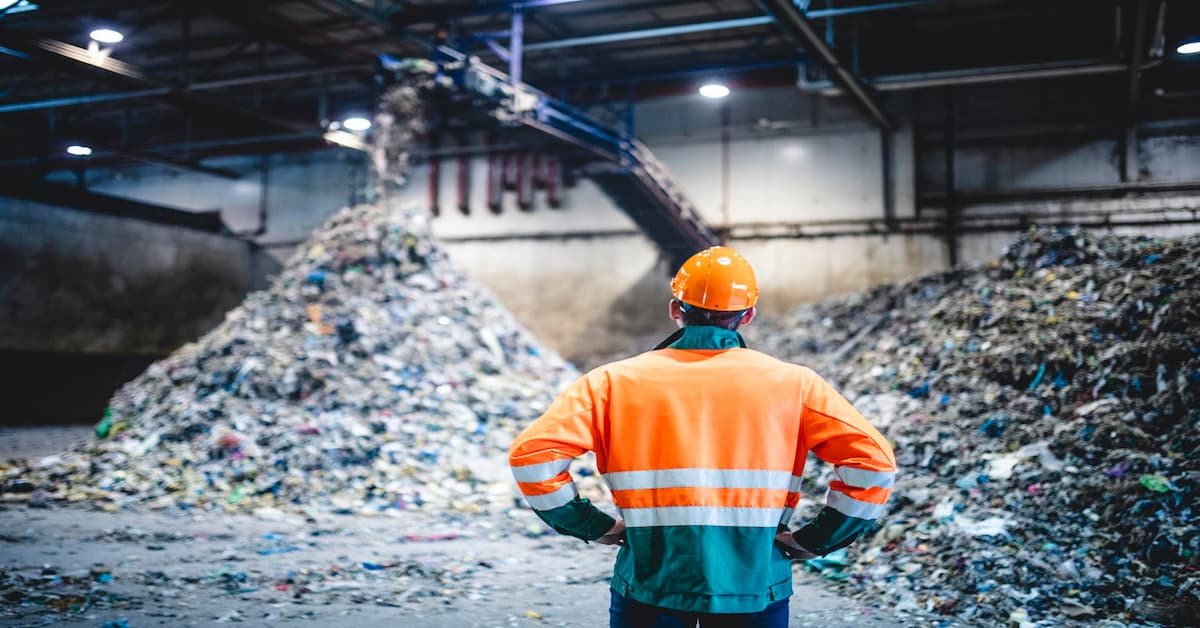
Against the backdrop of carbon neutrality goals and the growing emphasis on the circular economy, waste recycling is no longer a simple process of collection, transportation, and dismantling. Instead, it has evolved into a systematic project encompassing product design, usage management, recycling traceability, and resource regeneration.
In practice, low recycling efficiency, unclear sources, opaque material flows, and weak accountability continue to constrain the large-scale development of green recycling systems. Enabling waste items to be identified, understood, and tracked throughout the recycling process has become a critical challenge.
RFID technology is emerging as a powerful solution to this problem.
In traditional recycling systems, most waste items lose their “identity” once they enter the recycling stage. Recycling enterprises often rely on visual inspection, experience, or manual sorting, resulting in low efficiency and high error rates.
By embedding RFID tags into products or packaging, each item is assigned a unique digital identity from the very beginning. For large-scale consumer goods and packaging waste, UHF RFID stickers provide a cost-effective and scalable solution, allowing product information such as model, material composition, production batch, service life, and maintenance history to be stored and retrieved efficiently.
When the product reaches the end of its usable life and enters the recycling stream, RFID readers can instantly identify and extract this data. Waste items are no longer silent resources—they become data carriers capable of “communicating” their remaining value.
The core of green recycling lies in full lifecycle management. The value of RFID extends far beyond the recycling stage and runs through every phase of a product’s life, from manufacturing and distribution to use and disposal.
During production, RFID tags record material sources and environmental attributes, laying the foundation for future disassembly and reuse. In industries involving metal components, electronic assemblies, or high-temperature processes, RFID ceramic antennas ensure stable tag performance under harsh conditions, enabling reliable identification even after prolonged use or exposure.
During circulation and usage, RFID supports asset management and reduces losses and excessive consumption. At the end-of-life stage, systems can automatically determine whether an item is suitable for remanufacturing, component recovery, or material-level recycling based on lifecycle data.
This closed-loop data structure transforms recycling from an endpoint into the starting point of a new resource cycle, enabling recycling systems to become measurable, auditable, and continuously optimizable.
The recycling industry has long been characterized by high labor dependence and extensive management practices. RFID’s ability to perform fast, non-line-of-sight batch identification is fundamentally changing this reality.
At collection points and sorting centers, long range RFID reader modules enable the rapid identification of bulk waste items as they pass through gates or conveyor systems, significantly reducing manual scanning and sorting time.
In transportation and warehousing, real-time tracking of material flows minimizes repeated handling and inventory backlogs.
During dismantling, systems can automatically match items with appropriate processing methods based on tag data, improving overall resource utilization.
As recycling operations shift from experience-driven to data-driven models, efficiency improves while operational costs decline, creating favorable conditions for scalable and standardized industry development.
In highly regulated sectors such as electronic waste, power batteries, and medical devices, traceability and accountability are central policy concerns. RFID provides a solid technical foundation for regulatory supervision.
By integrating with regulatory platforms, RFID systems can record the complete journey of waste items—from generation to final disposal—helping prevent illegal dumping and unauthorized dismantling. In the event of environmental or safety incidents, responsibility can be quickly and accurately traced.
For enterprises, RFID serves not only as a compliance tool but also as a credibility asset, enhancing brand reputation and market trust.
The goal of the circular economy is not merely to recycle more, but to recycle better. The data accumulated through RFID-enabled systems makes high-quality circulation achievable.
By analyzing long-term recycling data, enterprises and policymakers can identify which products are more durable, which designs hinder recycling, and which materials deliver higher reuse value. These insights feed back into product design and industrial decision-making, forming a true “design–use–recycle–redesign” loop.
From this perspective, RFID is not just a recycling technology—it is a strategic tool for industrial upgrading.
The challenge of green recycling has never been a lack of awareness, but a lack of execution. By enabling waste items to be identifiable, traceable, and quantifiable, RFID brings unprecedented transparency, digitization, and systemization to recycling processes.
When every waste item can clearly state who it is, where it comes from, and what it can become next, green recycling no longer depends on moral incentives or subsidies alone. Instead, it is built upon reliable data and sustainable business logic.
On the path toward a low-carbon and circular future, RFID is helping resources flow again—and making sustainability truly achievable.
telif hakkı © 2026 Shenzhen Jietong Technology Co.,Ltd. her hakkı saklıdır.

ipv6 ağı desteklenir

 Türkçe


